Everything Indian Travelers Need to Know Before Visiting
Nepal's Forbidden Kingdom

Upper Mustang is one of Nepal's most extraordinary trekking
destinations. Often called the "Last Forbidden Kingdom of Nepal,"
this remote Himalayan region remained closed to foreign visitors until 1992.
Even today, the Nepal Government strictly regulates tourism to preserve its
Tibetan Buddhist culture, ancient monasteries, and fragile desert ecosystem.
Unlike popular treks such as Everest Base Camp or the
Annapurna Circuit, trekking in Upper Mustang requires special permits,
mandatory documentation, and planning through an authorized trekking agency. If
you're planning your dream journey to Lo Manthang, this guide covers every
permit, fee, rule, and travel requirement.
Why Does Upper Mustang Require a Special Permit?
Upper Mustang shares a sensitive border with Tibet (China)
and has remained culturally isolated for centuries. To protect its heritage and
control tourism, the Government of Nepal declared it a Restricted Area.
Because of this status, every foreign trekker must obtain a Restricted
Area Permit (RAP) before entering the region beyond Kagbeni.
The permit system helps:
- Preserve
ancient Tibetan culture
- Protect
monasteries and archaeological sites
- Regulate
visitor numbers
- Support
conservation efforts
- Ensure
trekkers travel safely with registered agencies
Where Does the Restricted Area Begin?
The Upper Mustang Restricted Area officially starts north
of Kagbeni.
Your permit will be checked at:
- Kagbeni
Checkpost
- Chele
- Ghami
- Tsarang
- Lo
Manthang
- Exit
checkpoints while returning
Always carry printed copies of your permits throughout the
trek.
Upper Mustang Trek Permits Required
To trek legally in Upper Mustang, you'll need the following
permits:
1. Upper Mustang Restricted Area Permit (RAP)
This is the most important permit.
It is mandatory for every foreign visitor entering Upper
Mustang.
Current Permit Fee
As of 2026, Nepal has updated the pricing structure. The
Restricted Area Permit is charged at USD 50 per person per day,
replacing the earlier flat USD 500 for the first 10 days. Some sources still
reference the older pricing, so travelers should always verify the latest rates
before booking.
Key Facts
- Mandatory
for all foreign nationals
- Valid
only for the approved itinerary
- Issued
only through a registered Nepali trekking agency
- Cannot
be obtained independently
- Passport
required
- Passport-sized
photographs may be requested
2. Annapurna Conservation Area Permit (ACAP)
Upper Mustang lies within the Annapurna Conservation Area.
Every trekker also needs an ACAP permit.
ACAP Fee
|
Nationality |
Fee |
|
Foreign Nationals |
NPR 3,000 |
|
SAARC Nationals |
NPR 1,000 |
|
Nepali Citizens |
NPR 100 |
The ACAP supports wildlife conservation, trail maintenance,
and sustainable tourism
Is TIMS Card Required?
Previously, trekkers also needed a TIMS (Trekkers'
Information Management System) Card.
However, for Upper Mustang, trekking agencies typically
arrange the required documentation, and current requirements should be
confirmed with your operator before departure, as Nepal's trekking regulations
have evolved in recent years.
Can You Trek Upper Mustang Independently?
No.
Upper Mustang is a restricted region.
Foreign travelers must book through a licensed Nepali
trekking agency that processes the required permits. Nepal has also
introduced regulations allowing solo trekkers in certain restricted areas to
apply through a trekking agency while still requiring a licensed guide. Always
check the latest rules before traveling.
Documents Required
To apply for the permits, you'll generally need:
- Original
passport
- Nepal
visa
- Passport-size
photographs
- Travel
itinerary
- Hotel
details (if applicable)
- Emergency
contact information
Your trekking agency usually handles the application
process.
Permit Processing Time
Permit processing generally takes:
- 3–5
working days under normal conditions
- Up to 7
working days during peak trekking seasons
To avoid delays, it's advisable to submit your documents at
least one week before your trek begins.
Best Time to Visit Upper Mustang
Unlike many Himalayan regions, Upper Mustang lies in a rain-shadow
area, making it one of Nepal's few trekking destinations suitable during
the monsoon.
Spring (March–May)
- Pleasant
temperatures
- Blooming
landscapes
- Ideal
photography
- Popular
trekking season
Summer / Monsoon (June–August)
- Excellent
weather in Upper Mustang
- Minimal
rainfall
- Clear
mountain scenery
- Less
crowded
Autumn (September–November)
- Crystal-clear
mountain views
- Comfortable
temperatures
- Festivals
and cultural experiences
Winter (December–February)
- Very
cold
- Heavy
snowfall
- Some
villages close
- Not
recommended for most trekkers
Typical Upper Mustang Trek Duration
Most itineraries range from:
- 10
Days
- 12
Days
- 14
Days
- 15
Days
Longer itineraries allow more time for acclimatization and
cultural exploration.
Highlights of Upper Mustang
During your trek, you'll experience:
- Lo
Manthang, the ancient walled kingdom
- Kagbeni
Village
- Chhoser
Cave Monasteries
- Sky
Caves
- Tibetan
Buddhist monasteries
- Colorful
prayer flags
- Kali
Gandaki Gorge
- Stunning
Himalayan desert landscapes
- Authentic
Tibetan culture
Estimated Cost of an Upper Mustang Trek
Apart from permits, travelers should budget for:
- Guide
fees
- Porter
services (optional)
- Accommodation
- Meals
- Domestic
flights (Kathmandu–Pokhara–Jomsom)
- Jeep
transfers (optional)
- Travel
insurance
- Personal
expenses
Depending on the itinerary, comfort level, and group size, a
complete Upper Mustang trek generally costs between USD 1,500 and USD 3,000
per person, including permits and logistics.
Important Travel Tips
- Carry
multiple passport photocopies.
- Purchase
comprehensive travel insurance covering high-altitude trekking.
- Bring
sufficient cash, as ATMs are unavailable in Upper Mustang.
- Acclimatize
properly to reduce the risk of altitude sickness.
- Respect
local customs and monasteries.
- Avoid
littering to help preserve the fragile ecosystem.
Frequently Asked Questions
Is Upper Mustang open throughout the year?
Yes, but the best trekking seasons are March to November,
especially during the monsoon when the region remains relatively dry.
How much is the Upper Mustang Permit?
The latest rule charges USD 50 per person per day for
the Restricted Area Permit. Some older blogs still mention the previous USD 500
for the first 10 days, so verify the latest rate before your trip.
Can Indians visit Upper Mustang?
Yes. Indian citizens can visit Upper Mustang but must comply
with Nepal's permit regulations for the restricted area and should travel
through an authorized trekking operator.
Is a guide compulsory?
A licensed trekking guide arranged through a registered
agency is required for Upper Mustang under the current permit system.
Do I need travel insurance?
Yes. Insurance covering emergency helicopter evacuation and
high-altitude trekking is strongly recommended.
Final Thoughts
Upper Mustang offers a rare opportunity to explore one of
the Himalayas' most preserved cultural landscapes. From ancient monasteries and
dramatic desert valleys to the timeless charm of Lo Manthang, every step
reveals a fascinating chapter of Himalayan history.
Before setting out, ensure all permits are arranged through
an authorized trekking agency, keep up to date with the latest permit
regulations, and allow enough time for proper acclimatization. With the right
planning, an Upper Mustang trek promises an unforgettable adventure into
Nepal's legendary Forbidden Kingdom.


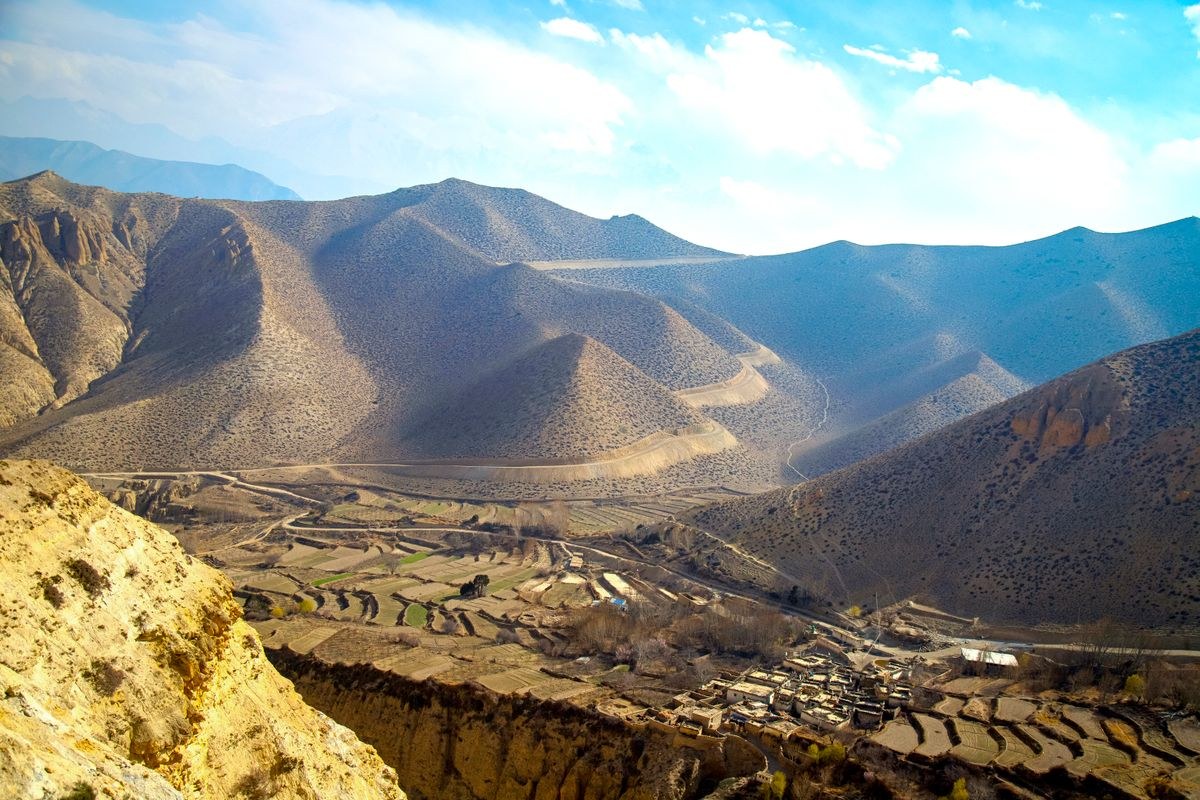
The breathtaking landscapes of Upper Mustang, Nepal's
Last Forbidden Kingdom.
1. Where Does the Restricted Area Begin?


Kagbeni serves as the official gateway to Upper Mustang,
where permit verification begins.
2. Ancient Lo Manthang


Lo Manthang, the ancient walled capital of the former
Kingdom of Lo, dates back to the 14th century and remains the cultural heart of
Upper Mustang.
3. Famous Sky Caves


The mysterious Jhong (Chhoser) Sky Caves, carved high
into sandstone cliffs, are among Upper Mustang's most remarkable archaeological
sites.
4. Trekking Landscape


Trekkers pass through dramatic canyons, wind-eroded
cliffs, and remote Himalayan villages on their journey to Lo Manthang.
5. Tibetan Culture


Upper Mustang preserves centuries-old Tibetan Buddhist
traditions, colorful monasteries, and vibrant prayer flags.


